How Bisexual Health Awareness Month Began — and Why It Still Matters

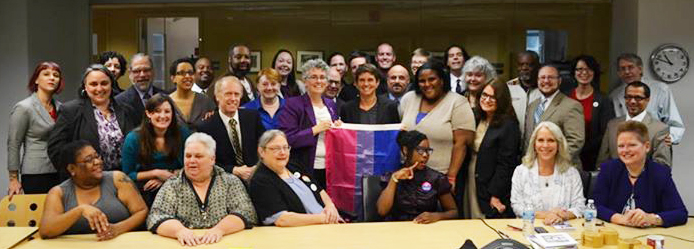
Bisexual leaders from across the country met at the National LGBTQ Task Force offices before the first White House Roundtable on Bisexual Issues at the White House. Ellyn Ruthstrom is holding the left side of the bisexual flag.

Each year, as Bi+ Health Awareness Month (BHAM) comes around, I feel a deep sense of pride. Since its founding in 2014, the bi+ community has sustained this vital campaign and made it a meaningful part of its annual calendar. My connection is personal—I helped create BHAM during my time as President of the Bisexual Resource Center. The idea began to take shape after I co-organized the first White House Roundtable on Bisexual Issues with the Obama Administration in September 2013. A team of 34 bi+ activists from across the country presented information about physical and mental health issues (including HIV/AIDS), partner violence, hate crimes, and workplace discrimination, bringing both statistics as well as real-life experiences to the table.

That experience was a wake-up call. For decades, research had grouped gay, lesbian, and bi+ people together, obscuring important differences. Once data began to be separated out, the disparities became clear: bi+ people face higher rates of depression, suicidality, cancer, tobacco use, partner violence, and poverty, among other challenges. Yet despite these heightened risks, services and programs were rarely designed specifically with bi+ people in mind. In fact, our inclusion often amplified broader LGBTQ+ statistics without translating into targeted support.

The experience of presenting this information in a high-level forum gave me hope that we could make a difference, and I came back to Boston energized to do more with the information and to reach more people. Fortunately, the BRC had a wonderful intern at that time, Jules Canfield, who drafted a proposal as part of their coursework at Boston University that became the blueprint for Bisexual Health Awareness Month. Together, we worked to design social media materials and mobilize organizations and individuals nationwide to participate in the inaugural campaign with its first theme: Bi the Way, Our Health Matters Too! 

This year, the theme Claiming the Right to Care as Bi+ People emphasizes that bi+ people are entitled to competent, affirming, and accessible healthcare without having to justify their identities, minimize their needs, or accept inadequate treatment. As the largest segment of the LGBTQ+ community, bi+ people deserve to have our health and our lives fully valued. The BRC is sponsoring two upcoming online events on March 24 and 31 to explore self-advocacy in healthcare and how providers can create more supportive, inclusive experiences.

It’s inspiring to see how BHAM has grown into an annual space for education, visibility, and connection. Seeing the wide range of supporters on the BiHealthMonth.org landing page reminds me how many dedicated activists continue to sustain and evolve this work. Their energy and commitment ensure that this awareness month remains relevant and impactful.

Ellyn Ruthstrom was the president of the Bisexual Resource Center for ten years and has been involved with bi+ organizing for over 35 years. She is the Executive Director of SpeakOUT Boston and the Project Director for the Visibility Impact Fund.

SpeakOUT Honors Holocaust Remembrance Day

On Holocaust Remembrance Day, we remember the millions of lives lost and the countless acts of courage and resistance that remind us of humanity’s resilience. Six million Jews were killed during the years of Hitler’s reign and their loss still reverberates today. Among those also persecuted by the Nazis were queer and gender-nonconforming people. People whose identities were erased, persecuted, or silenced, yet who still found ways to resist, love, and live authentically.

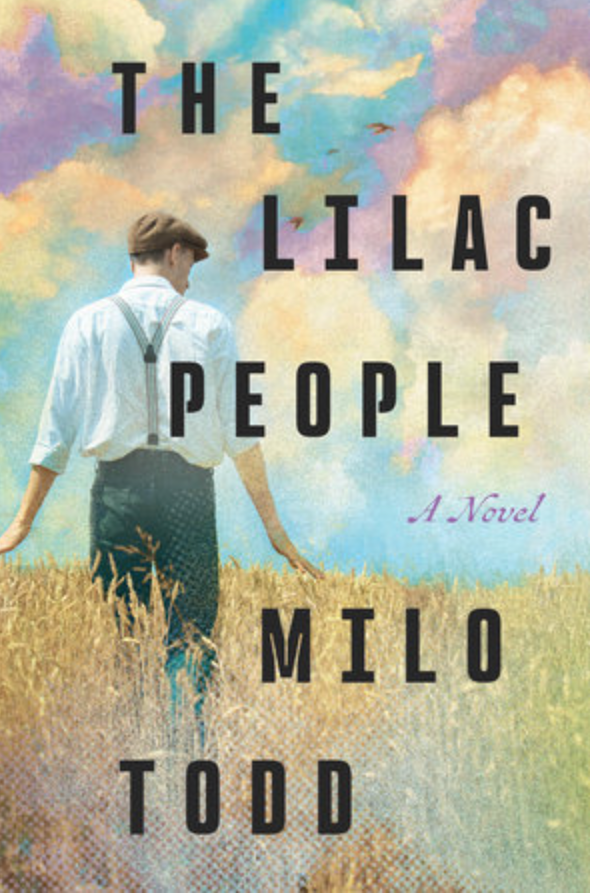
Author Milo Todd brings light to those stories through his bestselling debut novel, The Lilac People, which explores queer and trans existence in 1930s–40s Germany with rare depth and empathy.

Todd — a Lambda Literary Fellow, Massachusetts Cultural Council grantee, and co–Editor-in-Chief of Foglifter Journal (and a past speaker with SpeakOUT)— has been widely recognized for his contribution to LGBTQ+ storytelling. The Lilac People has been celebrated by The Washington Post, LA Times, Publishers Weekly, and others as a groundbreaking addition to historical fiction, reminding readers that remembrance must also include queer and trans narratives. 

A Reflection from Milo Todd, author of The Lilac People:

“I’m fascinated by queer and trans people throughout history; existence, community, language, all of it. How things evolve and change over time or stay surprisingly similar. Believe it or not, I’ve written several other novels. The Lilac People was just the first one to finally get picked up. But in all of my books, queer and gender-nonconforming history are important to me to showcase, especially since our modern times are experiencing a revival of denying our historical existence.

I started research for The Lilac People back in 2015 or so. The world was different then. Even as the United States started to tip into how we know it today, despite some parallels I saw unfolding (simultaneously while I was researching many of these same things, which was a surreal experience), I made the conscious effort to not let modern developments alter how I tackled the book. This wasn’t about the current US; this was about 1930s and ’40s Germany. Any overlap was coincidental.

That said, I approach my writing with the belief that hope and pain aren’t mutually exclusive. Times of great pain always also have hope and survival. You just need to know where to look. To paraphrase Mister Rogers, when times are tough, look for the helpers. And then become a helper yourself. I feel many of us believe that we have to do something grand to make a difference. But so-called small actions can be just as, if not more, life-altering. We hold a lot more power for positive change than we think.

People fail, things suck, and history echoes. But time and again, supporting one another is how we’ve gotten through difficult times. It’s true throughout history, it’s true now, and it’ll be true forever forward. We’re not the first people to experience something like this and we won’t be the last. And in a weird way, that gives me comfort. As what accidentally became my catchphrase while on tour: ‘The ghosts of history are watching, kissing our foreheads.’

As we honor lives lost and those who resisted, we remember: the past isn’t gone, it speaks to us, urging us toward empathy, action, and remembrance.

May we listen and may we always speak out.

Expand your knowledge by exploring the resource list compiled by SpeakOUT speaker and volunteer Heath Umbreit, MLIS, below. 

Books

The Lilac People by Milo Todd - This historical novel follows Bertie, a trans man who lives through WWII in hiding with his partner, Sofie. As the war ends, they find a young trans man collapsed near their home, still dressed in prison camp clothes, and vow to protect him from the Allied forces who are re-arresting queer prisoners while liberating the rest of the country.

Heavyweight: A Family Story of the Holocaust, Empire, and Memory by Solomon J. Brager - This memoir, told in graphic novel-style, explores Brager’s familial account of their great-grandparents’ escape from Nazi Germany, grappling with themes of inherited trauma, family mythology, world history, and the formation of identity and the self.

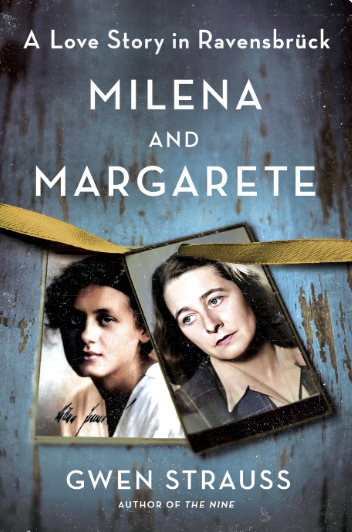
Milena and Margarete: A Love Story in Ravensbrück by Gwen Strauss - Milena Jesenska was a gender nonconforming, bisexual, anti-fascist Czech journalist. Margarete Buber-Neumann survived a Soviet gulag for two years before being traded to Nazi Germany. In 1940, the women met in the Ravensbrück concentration camp and fell in love. This biography tells their story.

The Other Olympians: Fascism, Queerness, and the Making of Modern Sports by Michael Waters - This nonfiction account tells the story of pioneering trans and intersex athletes against the backdrop of the Olympic Games in Nazi Berlin, the historical erasure of these athletes, and the connections to today’s panic around trans and intersex people in sports.

People Without History are Dust: Queer Desire in the Holocaust by Anna Hájková - Queerness remains one of the most stigmatized and erased aspects of Holocaust history. This nonfiction book tells the stories of queer and Jewish Holocaust victims and survivors to illuminate intersectional hidden histories in a time of genocide.

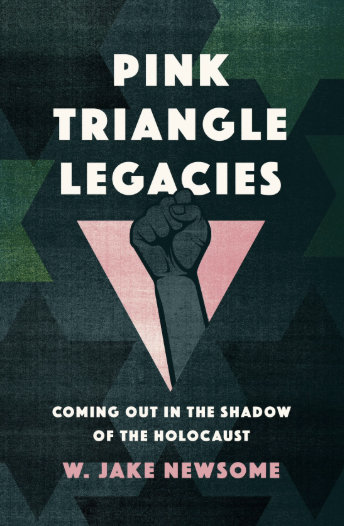
Pink Triangle Legacies: Coming Out in the Shadow of the Holocaust by W. Jake Newsome - A nonfiction account about how the LGBTQIA+ community transformed the pink triangle from its initial use as a Nazi concentration camp badge into a recognizable symbol of queer liberation.

Resistance: The LGBT Fight Against Fascism in WWII by Avery Cassell - This 2019 Lambda Literary Award finalist honors LGBTQIA+ people who fought against the Nazis in the 1930s and 1940s. It includes 41 historical biographies and is illustrated by 21 modern LGBTQIA+ activists.

Audio & Visual

Eldorado: Everything the Nazis Hate (Netflix) - Directed by Benjamin Cantu, this 2023 documentary traces how the social freedoms of 1920s Germany gave way to the Nazis’ persecution of LGBTQIA+ people through the lens of the titular Eldorado, a queer Berlin nightclub.

KHC: Centering LGBTQIA+ Voices (KHC Recorded Programs, via YouTube) - This nine-part audiovisual series features conversations about the Nazis’ persecution of LGBTQIA+ people, how this legacy reverberates in our contemporary society, and ways the community both memorializes and celebrates its history.

The Nazi Era (Making Gay History podcast, season 14) - In this twelve-part series, host Eric Marcus discusses the experiences of LGBTQIA+ people during the rise of the Nazi regime, World War II, and the Holocaust.

Additional Reading

“Holocaust History Shows Queer People Have Always Been Their Own Heroes” by Kate Sosin (The 19th News) - An article about queer historians’ work to archive and memorialize LGBTQIA+ Holocaust history and resistance against the Nazis.

“A License to Be (Different): 'Friends and Helpers' of Trans People in the Weimar Republic” by Thomas Jander (Deutsches Historisches Museum) - An article about sociologist Magnus Hirschfeld’s work.

“Trans Liminality and the Nazi State” by Zavier Nunn (Past & Present, Vol. 260(1)) - A microhistory about the life of trans woman Gerd R. in Weimar Berlin and Nazi Germany.